Location
Date
Type
Organizer
Abstract: As large language models become increasingly fluent, they are reshaping how we produce, consume, and evaluate information. Yet greater fluency raises a fundamental challenge: how can we trust text when it is becoming harder to tell who—or what—wrote it, and whether it is true? This talk explores this challenge from two complementary perspectives: detecting and interpreting AI-generated text, and using LLMs to support high-stakes information workflows such as fact-checking.
First, I will present recent work on interpretable machine-generated text detection. Rather than relying on opaque classifier scores, ExaGPT grounds its predictions in concrete evidence by identifying spans in a document that resemble examples from human-written or LLM-generated text collections. This example-based approach provides users with transparent, human-understandable justifications for why a text may appear human- or machine-authored. I will also discuss findings from a large-scale multilingual study of human perception, showing that people can often distinguish AI-generated from human-written text under appropriate conditions, but that “human-like” does not necessarily mean “human-preferred.”
Second, I will examine whether LLMs can automate the production of fact-checking articles. While most automatic fact-checking research ends with a verdict, professional fact-checkers publish carefully crafted articles that explain, contextualize, and justify their conclusions. I will present Qraft, an agentic framework that generates complete fact-checking articles by emulating key stages of the fact-checking workflow, including evidence selection, article planning, drafting, and revision. I will further discuss approaches for incorporating expert feedback into the generation process, highlighting both the promise and the limitations of current systems.
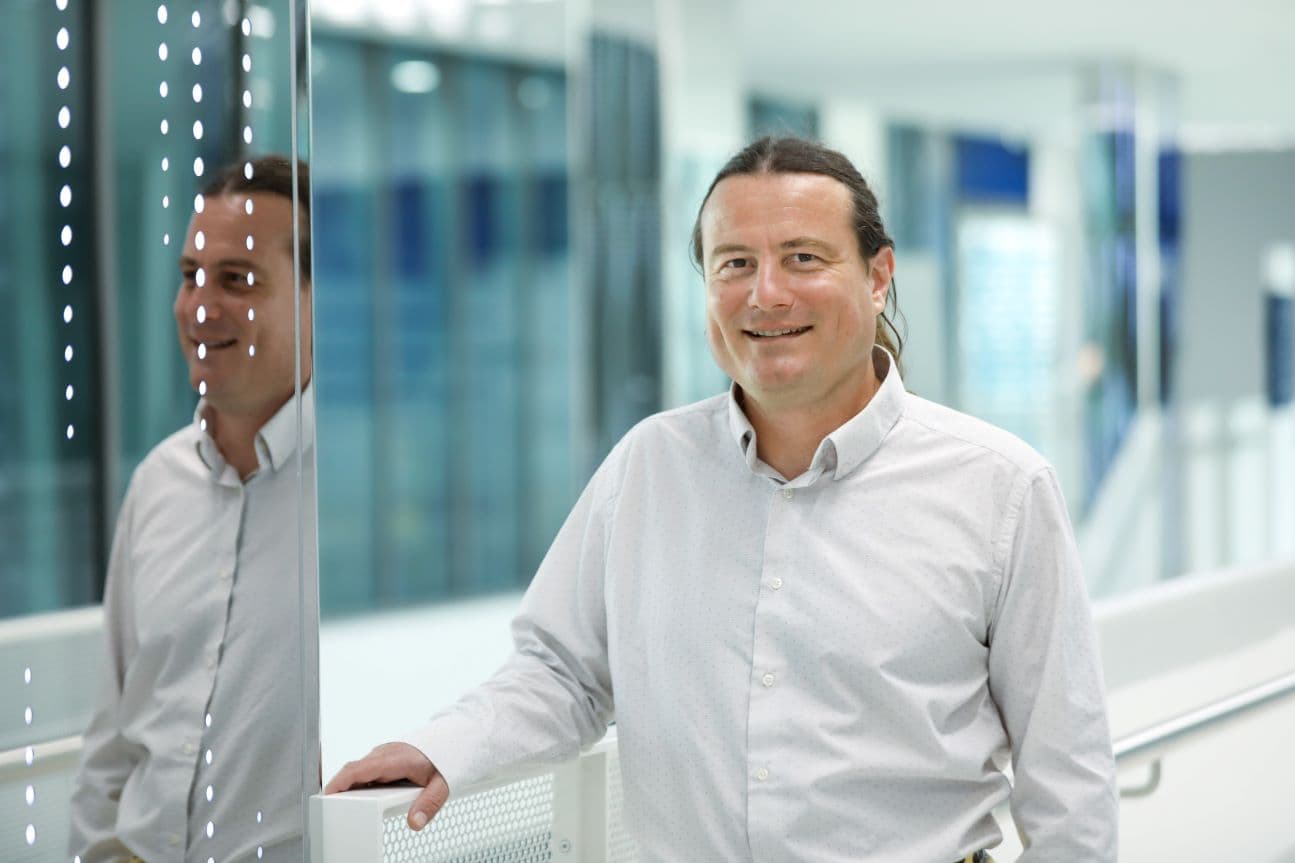
Bio: Preslav Nakov is Professor and Department Chair for NLP at the Mohamed bin Zayed University of Artificial Intelligence. He led the teams at MBZUAI's Institute for Foundation Models that developed Jais, the world's best open-source Arabic-centric LLM, Nanda, the world's best open-weights Hindi model, and Sherkala, the world's best open-weights Kazakh model. Previously, he was Principal Scientist at the Qatar Computing Research Institute, HBKU, where he led the Tanbih mega-project, developed in collaboration with MIT, which aims to limit the impact of "fake news", propaganda and media bias by making users aware of what they are reading, thus promoting media literacy and critical thinking. He received his PhD degree in Computer Science from the University of California at Berkeley, supported by a Fulbright grant. He is Chair of the European Chapter of the Association for Computational Linguistics (EACL), Secretary of ACL SIGSLAV, and Secretary of the Truth and Trust Online board of trustees. Formerly, he was PC chair of ACL 2022, and President of ACL SIGLEX. He is also member of the editorial board of several journals including Computational Linguistics, TACL, ACM TOIS, IEEE TASL, IEEE TAC, CS&L, NLE, AI Communications, and Frontiers in AI. He authored a Morgan & Claypool book on Semantic Relations between Nominals, two books on computer algorithms, and 250+ research papers. He received a Best Paper Award at ACM WebSci'2022, a Best Long Paper Award at CIKM'2020, a Best Resource Paper Award at EACL'2024, a Best Demo Paper Award (Honorable Mention) at ACL'2020, a Best Task Paper Award (Honorable Mention) at SemEval'2020, a Best Poster Award at SocInfo'2019, and the Young Researcher Award at RANLP’2011. He was also the first to receive the Bulgarian President's John Atanasoff award, named after the inventor of the first automatic electronic digital computer. His research was featured by over 100 news outlets, including Reuters, Forbes, Financial Times, CNN, Boston Globe, Aljazeera, DefenseOne, Business Insider, MIT Technology Review, Science Daily, Popular Science, Fast Company, The Register, WIRED, and Engadget, among others.